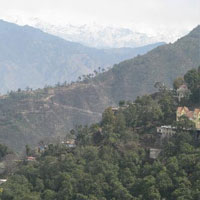
Dehradun is a perfect blend of colonial and contemporary architecture. Its name comes from two words: 'Dera' meaning 'camp' and 'Dun' meaning 'valley'. Surrounded by the River Ganges to the east and the River Yamuna to the west, this hill station serves as the gateway to the hill resort of Mussoorie. It is also the capital city of Uttarakhand state. There are several facets of Dehradun Tourism that must be explored with zeal and enthusiasm. Historically, the city was also called Dronashram, the sacred abode of Guru Drona, one of the central figures in the Mahabharata.
Acknowledged as one of the oldest cities in India, it is believed to be the place where Lord Rama and his brother Lakshman performed penance after defeating the demon Ravana. Beyond its mythological significance, Dehradun has been ruled by the Mauryan emperor Ashoka, followed by the Sikhs, Mughals, and Gurkhas. Finally, the British established it as an army base and an educational centre in 1815. Today, it is a vibrant city with a thriving commercial trade market.
The following are the main travel attractions of Dehradun:
Archaeological Survey of India Museum
Established by the British in 1761, this museum houses instruments used for mapping India during the 19th century. Some displays were specially designed by George Everest, the Surveyor General of India from 1830–1843. The museum is not open to the general public; visitors must obtain permission from the Surveyor General's office.
Mindrolling Monastery
Dehradun is home to numerous Tibetan establishments. Mindrolling Monastery features a large college, manicured gardens, and a majestic stupa. Believed to be one of the tallest stupas in the world, it houses a series of relics, murals, and Tibetan art. The major highlight is the colossal Buddha statue dedicated to the Dalai Lama. It follows the Nyingma School of Tibetan Buddhism.
Tapkeshwar Temple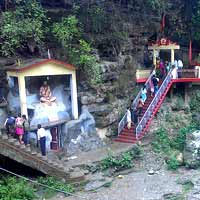
Those with a religious inclination can visit Tapkeshwar Temple, a cave temple dedicated to Lord Shiva. Situated on the bank of a seasonal river, the temple is formed from stalactites and stalagmites. Water drips from the top of a rock onto the phallic symbol of Lord Shiva, giving the temple its name, Tapkeshwar.
Sahastradhara
The word Sahastradhara literally means 'thousand-fold spring.' It is one of the most popular tourist destinations among Dehradun sightseeing attractions, known for its scenic beauty. Visitors are captivated by water dripping from stalactites, which enriches the water with sulfur, hence the name “sulphur springs.”
Forest Research Museum
Larger than Buckingham Palace, the major attraction here is the building itself. Constructed between 1924–1929, this red edifice features multiple towers, elegantly built arches, and Roman columns arranged around a quadrangle, bordered by a beautiful courtyard. Notable exhibits include paintings by Afshan Zaidi, displays on medicinal uses of trees, and a cross-section of a 700-year-old deodar tree.
Excursions from Dehradun
Travelers can visit nearby destinations such as Mussoorie (34 km) and Chakrata (98 km).
Shopping in Dehradun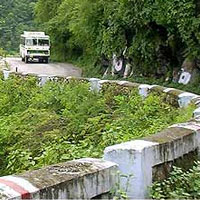
Souvenirs include Kukri knives, handicrafts, Basmati rice, woolens, and blankets.
When to Reach
The best time to visit is from October to December due to pleasant weather. The Jhanda Fair in Dehradun, celebrated in March–April, is also an excellent time for a visit.
How to Reach
Air: Jolly Grant Airport is the nearest airport to Dehradun, with regular flights from Delhi.
Rail: Dehradun Railway Station is the closest railhead, receiving trains from major cities such as Delhi, Mumbai, Lucknow, Varanasi, and Kolkata.
Road: Exploring Dehradun by road offers splendid scenic views. Regular bus services connect Dehradun to Mussoorie, Haridwar, Nainital, Kullu, Shimla, Agra, and Delhi.