Revealing the mystical cultural heritage of Delhi, adorned with its scattered ruins, one can relive the monumental legacy of India’s past through its elaborate architecture. Highlighting the dominance of power along with exemplary craftsmanship, Qutub Minar in New Delhi stands as one such masterpiece.
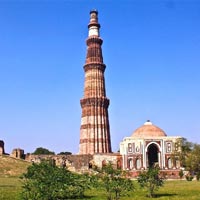
Located within the Qutub Complex in Mehrauli in the southern part of Delhi, it is one of the major historical monuments in India. It is celebrated as the tallest brick minaret in the world and is a remarkable example of Indo-Islamic architecture. This world heritage site in Delhi was commissioned by the first Muslim ruler of India, Qutb-ud-din Aibak.
With its ceremonious presence enhancing Delhi’s skyline, it is fascinating to note that it took 75 years to construct the Qutub Minar. The structure draws inspiration from the Minaret of Jam in Afghanistan. Having endured damage and undergone several reconstructions over the centuries, this iconic monument stands 237 feet tall and features 379 stairs, adding to its architectural charm.
Embellished with Arabic inscriptions, the Qutub Minar is often regarded as a ‘minaret of victory.’ Its form retains the elegance of Indo-Islamic Afghan architecture. The term ‘Qutub’ signifies Islamic justice, and the minaret is also known as the ‘marble tower of success.’
Following are the main tourist attractions of Qutub Minar:
Architecture
Built in the 13th century, the tower stands 72.5 m tall. Its rounded flutings and alternating angular patterns are among its most striking architectural elements.
Constructed with sandstone and red brick, this monumental structure has withstood the test of time. It features five storeys, each distinguished by unique designs and patterns.
Iron Pillar
This 7m-tall column in the Qutub Complex is a major tourist attraction. Its rust-resistant composition contributes to its remarkable longevity, intriguing material scientists and archaeologists alike.
Graffiti and inscriptions from various periods adorn the Iron Pillar. Notably, the oldest inscription is in Brahmi script, dating back to the Gupta Empire.
Quwwat-ul-Islam Mosque
Believed to be constructed on the plinth of a former Hindu temple, this mosque was built by Qutb-ud-din Aibak. Elements such as the stylobate, cloisters, courtyard, and sanctuary form an integral part of its architecture. Quranic verses and floral motifs further enhance its beauty.
Tomb of Iltutmish
Located on the north-western side of the Quwwat-ul-Islam Mosque, this tomb was built by Shams-ud-din Iltutmish, the son-in-law of Qutb-ud-din Aibak, in 1235 AD. The evolution of its architectural style showcases the refinement of Indo-Islamic craftsmanship. Three mihrabs, or prayer niches, are present inside the tomb.
Nearby attractions from Qutub Minar
Travelers can also explore the Lotus Temple (10 km), India Gate (12 km), Humayun’s Tomb (13 km), and Red Fort (20 km) while following the Qutub Minar Travel Guide.
Timing
It is open to the public throughout the day. One must experience the charm of Qutub Minar during the Qutb Festival of Indian classical music and dance held in November–December. Several musical performances, art exhibitions, and photography events also take place during this time, enriching the Qutub Travel Guide.
How to Reach
Many foreign visitors arrive in Delhi via international flights at the Indira Gandhi International Airport. The Qutub Minar metro station further enhances accessibility and makes travel convenient.
So, let your imagination soar as you uncover the classical narratives hidden within the Qutub Minar Tour. Fantasy, history, and architectural brilliance rarely come together in such a grand manner anywhere else. Go ahead and awaken the history enthusiast within you.